

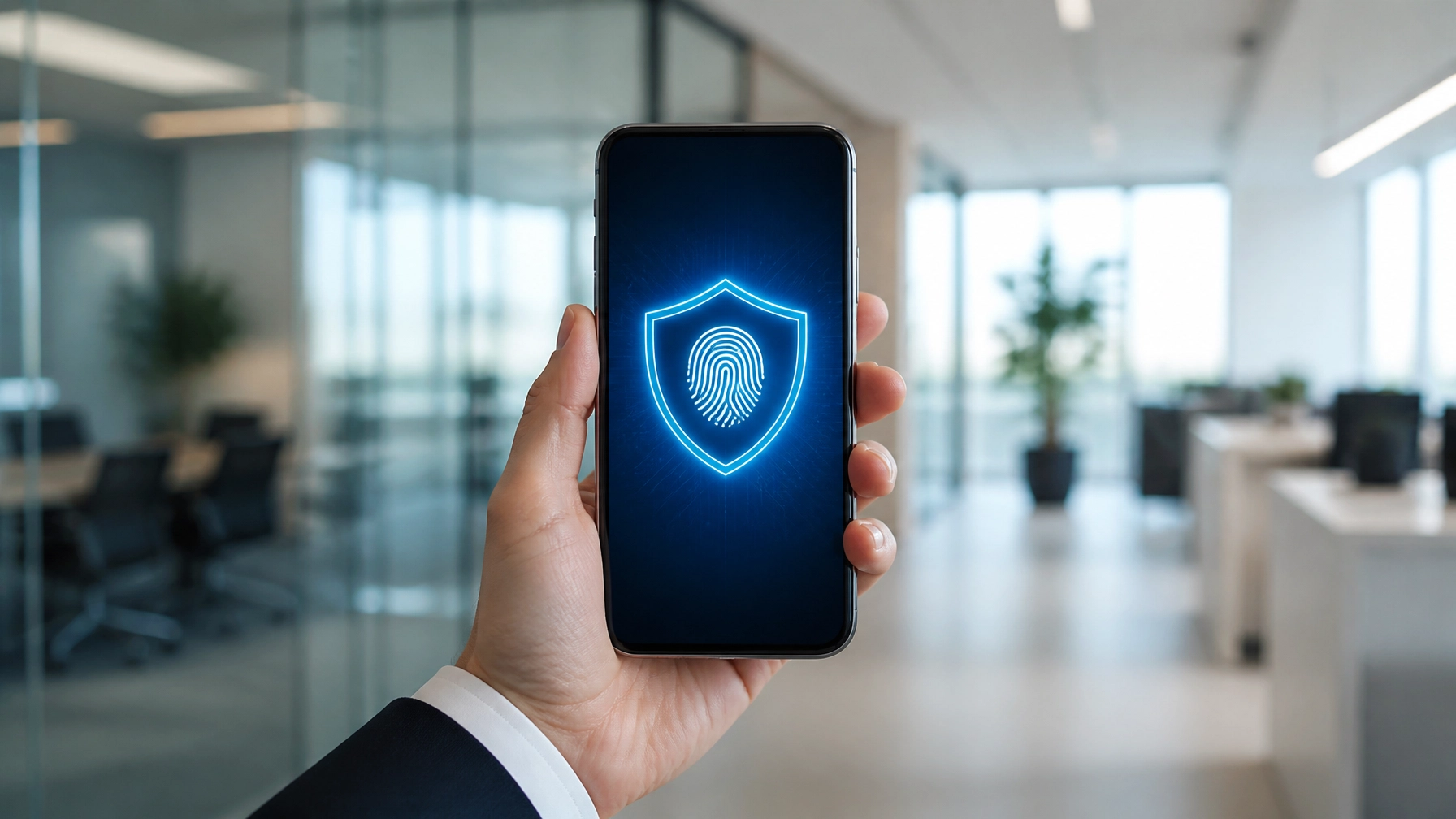
Let me ask you something: When you leave your office for the night, do you just lock the front door?
Of course you do. You might even check it twice. It’s a habit. You make sure the windows are shut, the alarm is set, and the "Closed" sign is flipped. It makes sense. You’ve spent years building your business, and you want to protect the physical things inside it.
But here is the problem: In the digital world, the "front door" isn't a piece of wood or steel anymore.
For a modern small business, your front door is an identity. It’s a username. It’s a password. It’s the set of digital keys your employees use to access their email, your customer data, and your financial records.
If someone steals those keys, it doesn’t matter how thick your digital "walls" (or firewalls) are. They can just walk right in.
This is why we need to talk about Identity Resilience. It’s a shift in how we think about cyber security solutions for small business, and it’s arguably the most important strategy you can adopt this year.
The Old Way vs. The New Perimeter
For a long time, IT security was built like a castle. You had a big wall (the firewall) and a moat (your network security). As long as the "bad guys" stayed outside the wall, you were safe.
But the world has changed. Your team is working from home, from coffee shops, and from their phones. Your data is in the cloud. Your "castle" doesn’t have walls anymore: it has people.
This means Identity is the new perimeter.
If an attacker gets hold of an employee's login credentials, they aren't "breaking in." They are "logging in." To your security system, they look exactly like a trusted team member.
Identity Resilience is about making sure that even if those credentials are targeted, your business can stay secure, detect the threat, and recover quickly.

What Exactly Is Identity Resilience?
Think of it like this: If your house catches fire, resilience isn't just about having a smoke detector. It’s about having a fire-resistant structure, a clear exit plan, and insurance to help you rebuild.
In the IT world, Identity Resilience means your identity systems (like your Microsoft 365 logins or your password managers) are:
- Protected: Hardened against attacks with things like Multi-Factor Authentication (MFA).
- Monitored: Constantly watched for "weird" behavior.
- Recoverable: Able to be restored to a safe state if something goes wrong.
At Platinum Web Services, we help businesses move beyond simple passwords and into a state of total resilience. It’s not just about stopping an attack; it’s about making sure an attack doesn’t stop you.
And Here Is Where It Gets Scary…
You might think, "My team has strong passwords. We’re fine."
The truth is, 43% of all cyberattacks now target small businesses. And research shows that nearly 60% of small businesses that suffer a major breach go out of business within six months.
That is not a statistic to ignore.
Attackers aren't just guessing passwords anymore. They are using sophisticated "malware-free" tactics: like phishing (pronounced 'fishing'): to trick your employees into handing over their keys. Once they have them, they move fast.
This is where ITDR (Identity Threat Detection and Response) comes in. It’s like having a high-tech security guard who doesn't just watch the door, but watches how people act once they are inside.

Spotting "Impossible Travel" and Anomalous Logins
Imagine one of your managers, Sarah, logs into her email from her home in Chicago at 9:00 AM.
Then, at 9:15 AM, Sarah’s account logs in again: but this time, the request comes from an IP address in Eastern Europe.
Unless Sarah has discovered the secret to teleportation, this is what we call Impossible Travel.
It’s a massive red flag. It tells us that Sarah’s credentials have likely been compromised. An Identity Resilience strategy uses ITDR tools to spot these "anomalous logins" (logins that are weird or out of character) the moment they happen.
Here’s what happens next in a resilient system:
- The system flags the login as high-risk.
- It immediately blocks access or demands an extra layer of verification.
- It alerts our team at Platinum Web Services so we can investigate.
Without this monitoring, an attacker could spend weeks inside your system, reading your emails and waiting for the perfect moment to strike. With it, the threat is neutralized in seconds.

Why Small Businesses Need This Most
Large corporations have entire departments dedicated to this. But as a small business owner, you’re busy running your company. You shouldn't have to worry about whether a login from London is legitimate or a sign of a looming disaster.
That’s why it consulting services are so critical. We provide that "enterprise-level" protection without the enterprise-level complexity for you.
We focus on the things that actually move the needle:
- Proactive Strategy: We don't wait for a breach to happen. We handle updates and use predictive analytics to keep your infrastructure running smoothly.
- Robust Cyber Security: We provide safeguards against the threats that actually keep you up at night, like ransomware and phishing.
- 24/7 Support: Because hackers don't work 9-to-5, and neither does our commitment to your security.
So, What Can You Do?
If you want to start building Identity Resilience today, you don't need a PhD in computer science. You just need to start with the fundamentals.
- Enforce MFA Everywhere: Multi-Factor Authentication is the single most effective way to stop identity-based attacks. If you aren't using it for every single account, start now.
- Educate Your Team: Most people don't break the rules on purpose. They just don't know what to look for. Turning your employees into a "human firewall" is your best defense.
- Monitor Your Logs: Ensure someone is actually watching for those "impossible travel" events. If a tree falls in the woods and no one hears it, it still fell. If a hacker logs in and no one sees the alert, you’re still breached.
- Have a Recovery Plan: If an identity system is compromised, how fast can you lock it down and restore safe access?
If you're interested in how recent regulations are changing the landscape for small businesses, you might want to read about CISA’s new 72-hour rule. It’s a great example of why speed and resilience are no longer optional: they are required.

The Truth Is…
Your business is too important to leave the digital front door unlocked.
Identity Resilience isn't just a technical buzzword. It’s about peace of mind. It’s about knowing that even if the worst happens, you have the tools, the monitoring, and the partner to handle it without missing a beat.
At Platinum Web Services, we help businesses like yours with this every day. We believe you should be able to focus on scaling your business while we handle the burdens of IT and security.
If you’d like to see how resilient your current setup really is, or if you're ready to upgrade your cyber security solutions for small business, let’s have a conversation.
We’re here to help you turn your identity security from a potential weakness into your strongest asset.
0 Comments